
Introduction: Is 6G real—or just hype?
Every time a new mobile generation rolls out, the same question pops up almost immediately: what’s next? We’re still getting used to 5G in many parts of the world, yet conversations around 6G are already heating up. That naturally leads to the big question: Is 6G real, or is it just another tech buzzword?
Short answer: yes, 6G is real—but not in the way most people imagine today. It’s not something you can test on your phone, and telecom companies aren’t hiding secret 6G towers somewhere. Instead, 6G is currently in a research and standard-definition phase, where scientists, universities, and telecom giants are laying the groundwork for what wireless communication might look like in the 2030s.
In this article, we’ll cut through the noise and clearly explain:
- What 6G actually is (and what it isn’t)
- Expected launch timelines
- How fast 6G could be compared to 5G
- Why it matters more than just “faster internet”
I’ll also share a more practical perspective—based on how previous generations evolved—so you can separate realistic expectations from marketing hype.
What exactly is 6G?
To understand whether 6G is real, it helps to know how mobile generations work.
Mobile networks don’t appear overnight. Each generation:
- Starts as academic research
- Moves into industry trials
- Becomes a global standard
- Finally reaches consumers years later
6G is currently in step one and two.
A working definition of 6G
6G (sixth-generation wireless) is expected to be a next-generation mobile communication system that goes far beyond smartphones. While 5G focuses on speed, low latency, and IoT, 6G aims to merge:
- Ultra-high-speed connectivity
- Artificial intelligence at the network level
- Sensing, communication, and computing into one system
Organizations like International Telecommunication Union (ITU) and companies such as Nokia and Samsung are already publishing white papers and running early experiments.
That’s a strong signal that 6G is not science fiction—it’s planned technology.
Is 6G officially confirmed?
Yes—but with an important caveat.
There is no finalized global 6G standard yet. However:
- Governments have allocated research funding
- Universities are running terahertz communication experiments
- Telecom vendors are releasing 6G vision documents
In the telecom world, this is exactly how 3G, 4G, and 5G started.
From experience, the moment researchers start agreeing on what a generation should achieve, its existence is no longer theoretical. That’s where 6G stands today.
Expected 6G launch timeline
One of the most searched follow-ups to “Is 6G real?” is when will it launch?
Let’s be realistic.
Likely 6G timeline (based on past generations)
| Phase | Expected Period |
|---|---|
| Fundamental research | 2020–2026 |
| Early prototypes & trials | 2026–2028 |
| Global standard definition | 2028–2030 |
| Commercial rollout | 2030–2032 |
If this feels far away, remember:
- 5G research began around 2010
- Consumers saw meaningful 5G adoption nearly a decade later
So when companies say “6G is coming,” they usually mean the groundwork is being laid now, not that it’s launching next year.
How fast will 6G be? Expected speed explained
This is where excitement—and misinformation—explode.
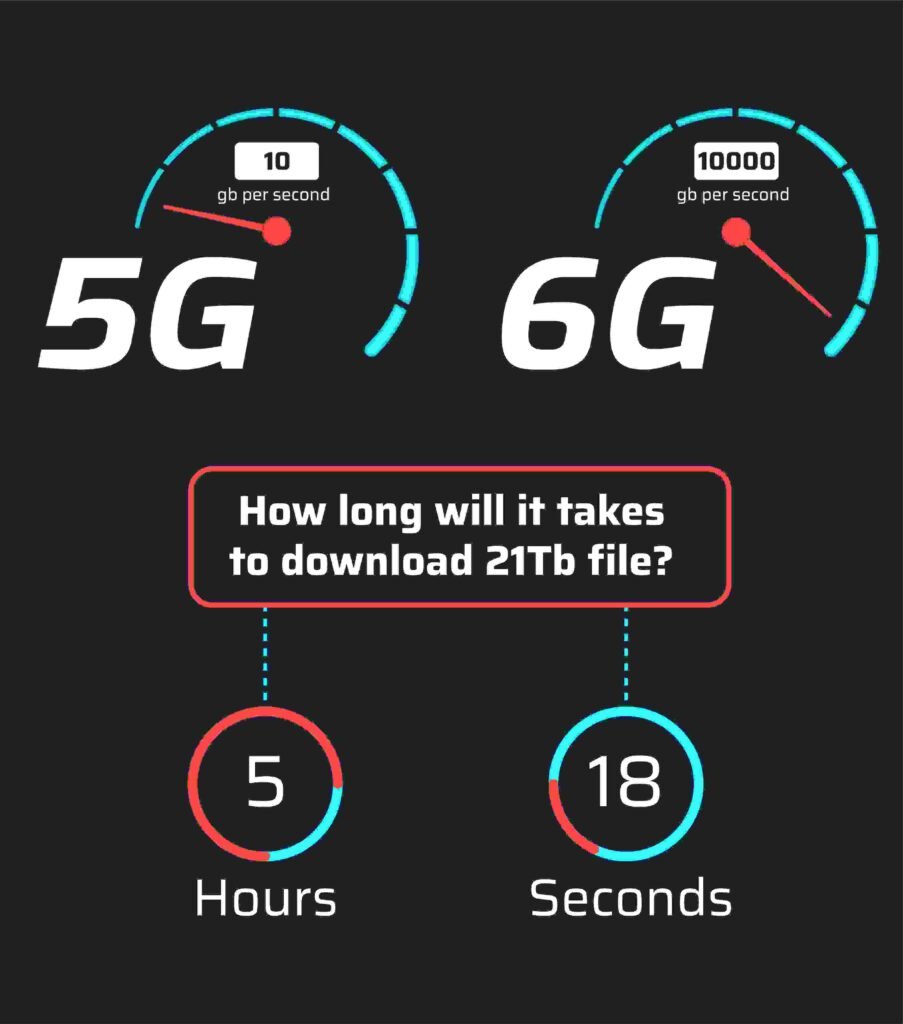
Theoretical 6G speeds
Researchers estimate that 6G could achieve:
- Up to 1 terabit per second (Tbps) in controlled environments
- Latency as low as microseconds, not milliseconds
To put that into perspective:
| Technology | Peak Theoretical Speed |
|---|---|
| 4G LTE | ~1 Gbps |
| 5G | ~10–20 Gbps |
| 6G (theoretical) | Up to 1 Tbps |
That means downloading a full-length 4K movie in a fraction of a second.
Reality check on speed claims
Here’s the part most blogs skip.
Just like 5G:
- Real-world 6G speeds will be much lower than lab results
- Coverage, device limits, and power consumption will matter more than raw speed
From my experience watching 4G and 5G rollouts, stability and consistency matter more to users than eye-catching speed numbers. Expect 6G’s real value to come from what it enables, not just how fast it is.
6G vs 5G: What’s the real difference?

Let’s break this down clearly.
| Feature | 5G | 6G (Expected) |
|---|---|---|
| Peak speed | Up to 20 Gbps | Up to 1 Tbps |
| Latency | ~1 ms | Microseconds |
| Frequency bands | Sub-6 GHz & mmWave | Terahertz spectrum |
| Intelligence | Limited AI optimization | AI-native networks |
| Main focus | Mobile broadband & IoT | Immersive, intelligent connectivity |
The biggest shift: AI-native networks
Unlike previous generations, 6G is being designed with AI built into the network itself—not added later. That means:
- Networks that self-optimize in real time
- Better handling of congestion
- Smarter energy usage
This is a bigger leap than just “faster internet.”
What will 6G actually be used for?
This is where 6G starts to feel real.
Potential real-world use cases
- Holographic communication (true 3D calls, not avatars)
- Real-time digital twins of cities, factories, or hospitals
- Brain-computer interfaces (early-stage research, not mind-reading)
- Ultra-precise location & sensing for autonomous systems
- Massive machine connectivity beyond today’s IoT
In other words, 6G is less about scrolling faster and more about enabling technologies that don’t work well on current networks.
Challenges standing in the way of 6G
If 6G sounds incredible, why isn’t it closer?
Key challenges researchers are facing
- Terahertz signals struggle with distance and obstacles
- Power consumption could be significantly higher
- New hardware materials are required
- Global standardization takes years of negotiation
These aren’t small problems—but they’re similar to the obstacles that delayed mmWave 5G. History suggests they’re difficult, not impossible.
Is 6G safe? Health and regulation concerns
Every generation raises health questions.
So far:
- 6G research follows international exposure guidelines
- No consumer-level 6G devices exist yet
- Regulatory bodies will evaluate safety long before deployment
If you’re concerned, the key takeaway is this: 6G will not reach consumers without passing stricter safety reviews than any generation before it.
My honest take: Should you care about 6G right now?
Here’s a grounded perspective.
If you’re a:
- Regular smartphone user → 6G won’t matter for years
- Business owner or developer → 6G signals where long-term tech is heading
- Investor or tech enthusiast → understanding 6G early gives context, not profit tomorrow
We’re still in the phase where 5G hasn’t reached its full potential. 6G matters most as a direction, not a product.
Conclusion: So, is 6G real?
Yes—6G is real, but it’s not here yet.
It exists today as:
- Active global research
- Clear industry roadmaps
- Early experimental technology
It does not exist yet as:
- Consumer phones
- Commercial networks
- Something you need to upgrade for anytime soon
If history repeats itself, 6G will quietly evolve over the next decade—until one day, it’s no longer a question but a default.
Call to Action
What do you think—does 6G sound like the future of connectivity or over-engineering ahead of its time?
👉 Share your thoughts in the comments
👉 Explore our related articles on future internet technologies
👉 Subscribe to stay ahead of what’s coming before it becomes mainstream
The future may be a decade away—but understanding it starts today.

Pingback: Why is the internet slow today? Common Reasons & Easy Fixes